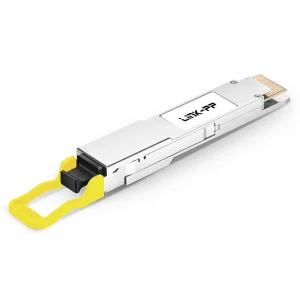
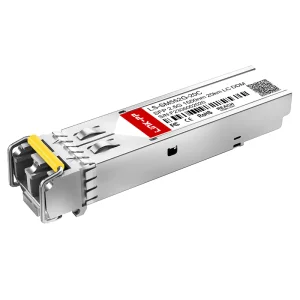
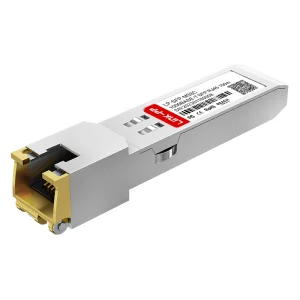
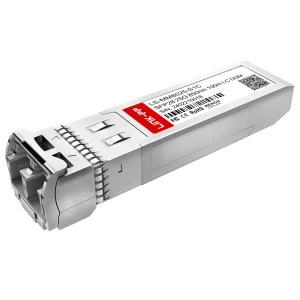
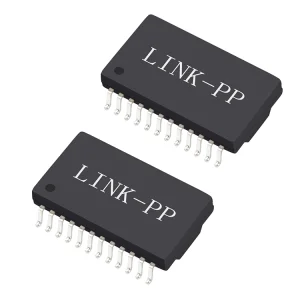
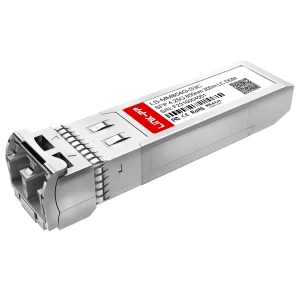
Explore our high-performance optical transceiver modules engineered for seamless integration across enterprise switches, optical transport nodes, and cloud network fabrics.
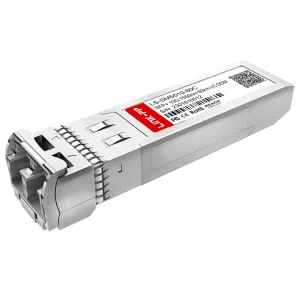
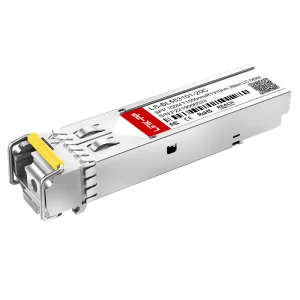
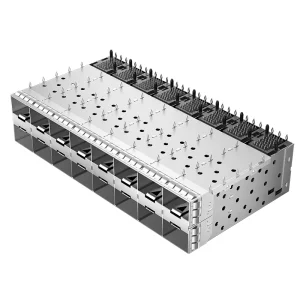
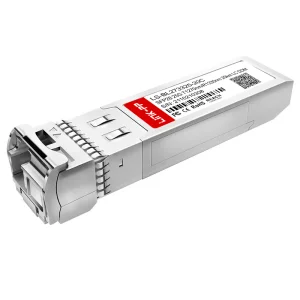
Founded on the principles of engineering excellence and technological innovation, LumoWave Optical Technology Co., Ltd. has evolved into a global force in the optical communications sector. As a dedicated OEM/ODM manufacturer, we design and produce high-performance optical modules ranging from 10G to 800G, supporting SFP, QSFP, QSFP-DD, and coherent optical form factors.
Our expansive production hub stretches across a massive 320,000㎡ facility, equipped with automated fabrication lines, optical alignment systems, and advanced diagnostic labs. This allows us to comfortably sustain high-volume demand while maintaining an agile supply chain of over 1,200 downstream and upstream partners worldwide.
Whether servicing regional telecom operators, high-density cloud data centers, or system integrators, LumoWave remains dedicated to providing localized software compatibility, customized hardware engineering, and bulletproof long-distance transmission solutions.
LumoWave designs end-to-end transceiver architectures to address the most critical performance bottlenecks across multiple industrial and commercial sectors.
Optimized for high-density spine-and-leaf architectures. Supporting ultra-fast 100G, 200G, and 400G PAM4 connections, ensuring low latency, minimized thermal output, and high spectral efficiency.
BiDi and DWDM transceivers optimized for high-capacity metropolitan rings and base stations. Features rugged industrial-grade temperature thresholds and stable wavelength control.
Broad compliance with multi-vendor switches and core security routers. Guarantees 100% interoperability with major legacy architectures, driving smooth network scaling.
LumoWave maintains an extensive testing matrix across every phase of production. We ensure zero field failure rates through structural testing and reliability labs.
All imported laser chips, photodetectors (PIN/APD), and optical sub-assemblies (TOSA/ROSA/BOSA) undergo strict incoming inspection to screen out early-stage optical degradation.
In-process monitoring controls the precise micro-soldering and passive/active coupling steps, utilizing advanced automated optical inspections (AOI) to eliminate structural misalignments.
Before shipment, 100% of our products undergo eye diagram analysis, bit error rate (BER) checks, wavelength verification, and aging stress tests under varying temperature curves.
Remaining at the cutting edge of high-frequency communications, LumoWave is actively investing in next-generation silicon photonics and ultra-broadband architectures.
Expanding the footprint of 400G ZR and ZR+ modules to support metropolitan transport links spanning over 120km, removing the need for costly amplification systems.
Developing integrated silicon photonic ICs to decrease internal component counts, lower production costs, and scale transmission speeds up to 800G and 1.6T.
Refining our circuits to optimize heat dissipation. Our focus is to reduce power consumption per gigabit by up to 20%, supporting eco-friendly hyperscale data centers.
LumoWave combines global production capabilities with localized customer service to ensure seamless project execution and strict regulatory compliance.
We program our transceivers with custom firmware to match the unique EEPROM registers required by different equipment brands. Our solutions are fully compatible with over 50 leading hardware brands, including Cisco, Ubiquiti, Juniper, Mikrotik, and Arista, preventing port lockout issues.
Our operations comply with international environmental and quality regulations, securing certifications for CE, FCC, RoHS, and REACH. This ensures our transceivers meet environmental guidelines in North America and the European Union.
We provide localized technical support to assist you with installation, configuration, and troubleshooting. Our responsive engineering teams are available to minimize project downtime.







Detailed technical guidance on SFP transceivers, compatibility configuration, and optical parameters.
Digital Diagnostics Monitoring (DDM), or Digital Optical Monitoring (DOM), allows users to monitor real-time parameters of the SFP. This includes optical output power, optical input power, internal temperature, laser bias current, and transceiver supply voltage. Monitoring these metrics helps network administrators identify potential fiber degradation or link issues before a failure occurs.
We resolve third-party lockouts by reading, writing, and custom-coding the EEPROM (Electrically Erasable Programmable Read-Only Memory) on the transceiver's PCB. Our engineers emulate the vendor's signature and register mapping. This ensures our modules are recognized correctly when plugged into switches from Cisco, HP, Juniper, and other major manufacturers.
Single Mode SFP modules utilize a narrow 9/125µm fiber core size and long laser wavelengths (typically 1310nm or 1550nm). This setup minimizes dispersion over long distances (ranging from 10km up to 80km or more). In contrast, Multimode modules use wider 50/125µm or 62.5/125µm core fibers and shorter 850nm VCSEL lasers. These are suited for short-range links, typically up to 300m or 550m.
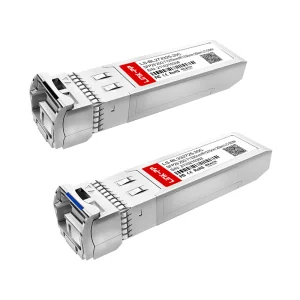
BiDi SFP transceivers use Wavelength Division Multiplexing (WDM) to transmit and receive signals over a single strand of fiber (simplex). By utilizing different wavelengths, such as 1310nm-TX/1550nm-RX and vice-versa, they double the capacity of your existing fiber infrastructure. This cuts cabling costs in half by eliminating the need for dual-fiber runs.
SFP form factors are defined by the Small Form Factor Committee's Multi-Source Agreements (MSAs), including SFF-8472 and SFF-8431. These specifications detail standard dimensions, electrical interfaces, pin assignments, and memory mapping. This ensures that any MSA-compliant SFP can fit into any MSA-compliant switch cage.
Non-Return-to-Zero (NRZ) modulation uses two voltage levels to represent binary 0 and 1, carrying 1 bit per symbol. Pulse Amplitude Modulation 4-Level (PAM4) uses four signal levels (00, 01, 10, 11) to transmit 2 bits per symbol. This doubles the data transmission rate at the same physical baud rate, which is essential for high-speed 400G and 800G data transfer.
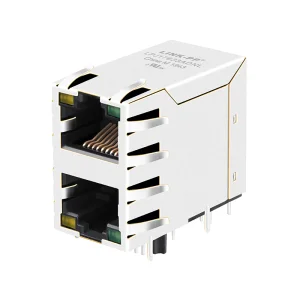
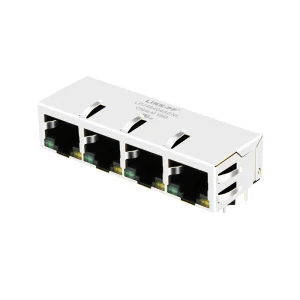
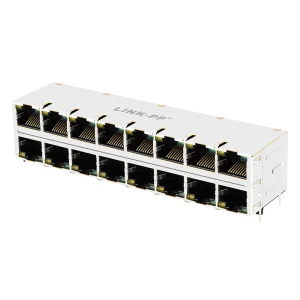
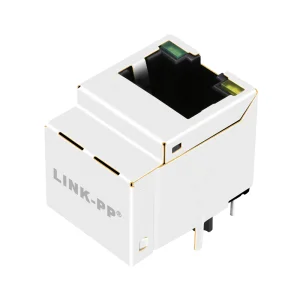
Discover our complete portfolio of high-performance passive and active components, including modular connectors, RJ45 ports, and fiber transceiver modules.
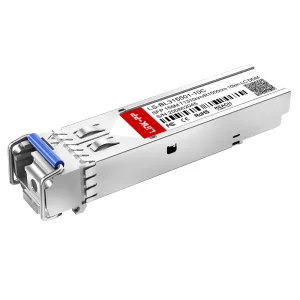
 LumoWave